The tears of things

So the other day I was driving back from Kansas City with my wife. We’d gone there for the Labor Day weekend to visit our son and his girls, wife & daughter, who had just moved there when the daughter enrolled in her freshman year at KC Art Institute.

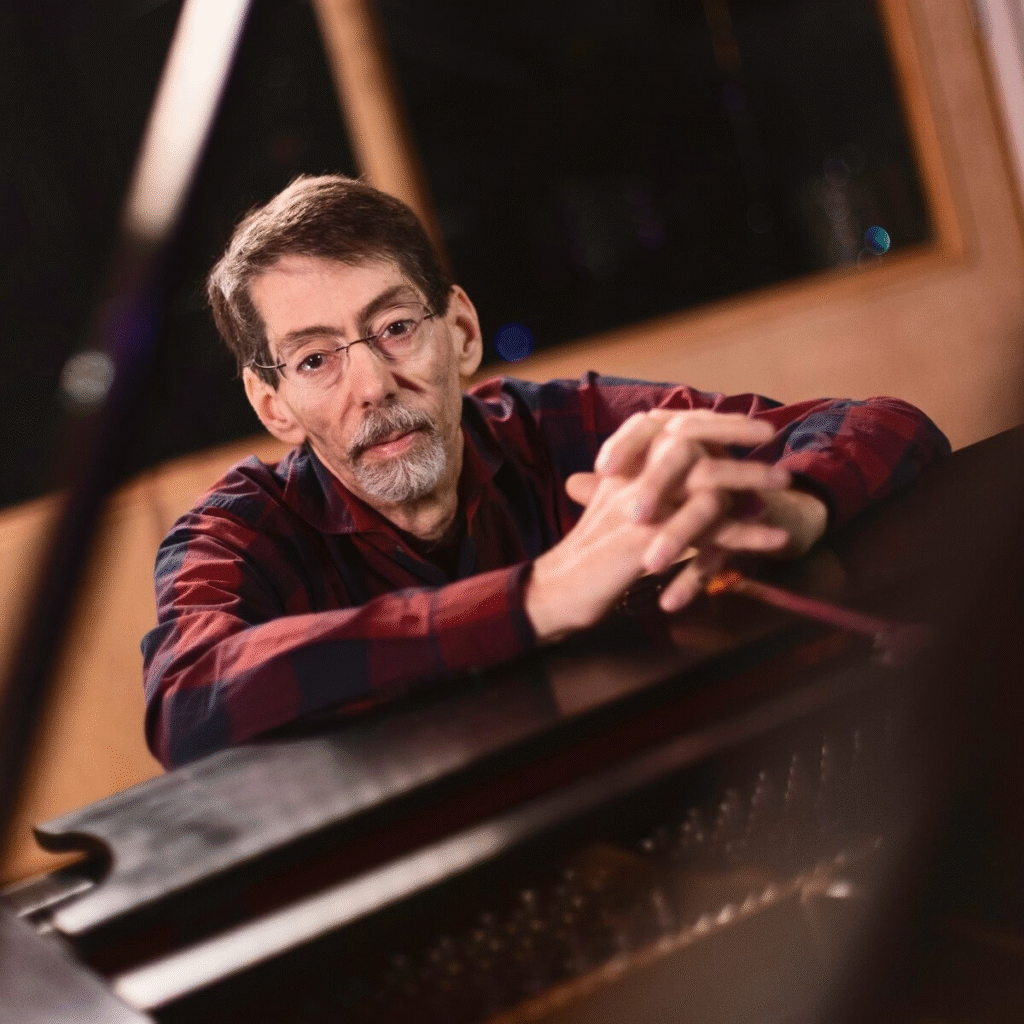
Driving back and listening for the first time in a while Fred Hersch’s jazz composition set to Whitman’s Song of Myself, I suddenly found myself crying. The tears of things, the tears that are in all things transient, pathetic, frangible, were flowing down my cheeks, and my wife, beside me, asked what was wrong. “Only,” I said, “that so many people will never hear or never realize this beauty.”https://youtu.be/_U6uiNDOxXI

Composer and pianist Fred Hersch. Kurt Elling and Kate McGarry
are the voices in the YouTube recorded version cited here.

To realize this beauty, of course, like that in most complex jazz and classical compositions, may require a little education. And that is another question, a big one, which we’ll take up presently.

Homos and fairies

Well, these are sensitive times, n’est pas?

Reading a newish biography of the poet Hart Crane, about whose work I wrote a Ph.D. dissertation many moons ago. In doing so, I used the biographical as well as bibliographical work available at the time, especially early bios by Philip Horton (1937) and Brom Weber (1948), plus John Unterecker’s Voyager: A Life of Hart Crane (1969).

The newish bio (2002) is titled simply Hart Crane: A Life by the British writer Clive Fisher.

Hart Crane
Expressionist portrait of Hart Crane by the Mexico painter David Alfaro Siqueiros (1931).

As far as I recollect, it supplies lots of material that Weber and Unterecker did not have access to, including discussions and evaluations of his homosexuality.

The title of this blog passage comes from a friend of Crane’s, Claire (Spencer) Smith, who in the summer of 1919 reacted in shocked disbelief when he suggested he became homosexual because she had refused to marry him:

… if I had not made such a mess of things, he would not have become a Homo. I asked him, “I don’t see why you should become a Fairy for any other reason except you are one.” He answered, and I remember that he was on the point of crying: “No one has ever told me that I was beautiful before.”

Well, we wouldn’t or couldn’t say fairy or homo today, would we, unless we were malicious and probably right wing? For we are restrained not only by politeness or politesse but correctness, yes? There are fearful fogs that restrain us and retrain us, for better or worse, in our speech habits.

Consulting Merriam-Webster, you will find that the words polite and politesse derive “from French, from Middle French, cleanness, from Old Italian pulitezza, from pulito, past participle of pulire to polish, clean, from Latin polire.” So we with manners, polished manners, will refrain from using unpolished and unsanctioned terms.

As for Crane himself, I’m not sure what vocabulary he used, in his day (1899-1932) to describe his sexuality. At the end of his life, it’s true, he had an erotic relationship with a woman, the ex-wife of a friend, but this attachment was not so strong, evidently, as to prevent him from soliciting sex from sailors on the ship on which he was returning from a year in Mexico to the US. And from which, beaten by the sailors and in despair, he threw himself to his death.

Bisexual, finally, anyone? Androgynous? Just fooling around? It doesn’t make that much a difference finally, I would think. Crane is gone, long gone, though his poetry remains and continues to excite admiration.

Where do writers’ voices go?

Last week I dropped in at Fayetteville’s only remaining independent bookstore for new books, Pearl’s, for a biweekly Writers Night I had not previously attended. Coming in new and cold is always a challenge. I had no idea what the meeting would be like, or who would show up, but found out soon enough in a rambling hour and a half.

Must’ve been hoping the Night would resemble the old monthly open-mic night at a previous indie bookstore, Nightbird, which started out big, dwindled, and finally crashed.  The bookstore space dwindled, that is, and out went the cafe; a brewery moved in next store and thrived; the bookstore owner herself, may she rest in peace, died of cancer.

The open mic night at Nightbird, run by Ozark Poets and Writers, had been semi-curated: one main speaker was scheduled ahead of time, that is, and then on the night of the reading anyone could sign up for five minutes and try his or her luck with the listeners. As I recall, it was a lotta fun. I put in my two cents’ or five minutes’ worth several times, and we all got to hear some rambunctious verse.

When Pearl’s opened, about a half mile away, it attracted a good selection of local book readers and set up events, like Writers Night, for after hours. Necessarily, it could be, the focus from the start was more on commercial or pop genres than literary stuff. Pearl’s had to sell to stay alive, after all, in this not book-hungry day and age.

I don’t think the Pearl’s Writers Night is for me. There were about 15 people there, including me and Gerry Sloan, a poet friend and retired music professor; guests kept trailing in and eventually filled and overfilled the big table at the far end of the room.

Most were scifi and fantasy writers, or said they were. No one read anything. Instead, it was a free floating bull session facilitated by a gal who works at the bookstore.

Some intelligent and funny people, but I’m not interested in scifi or other pop genres nor, at this stage of the adventure, in helping newbie writers.

Better to stick with, and fortify, seems to me, existing poetry groups or those waiting to be born in whatever form.

Don’t you too want to take a chance with an open mic? To test out your ideas, images & voice? You may not have a ghost of a chance unless you put your name in the hat. Come on. We’ll call you up a bit later in the evening. Meanwhile, buy a soda or a beer from the eager to please store owners.

Sound vs. sense: the poet’s mind

Poets are interested in language, is that a surprise? In the way language works, its twists and turns, its quirks and oddities, its strengths and its obscurities, its absurdities.

In the sounds of words, their musicality, no matter how opposed to sense the music may be.

Words, after all, are a social contract and contact. We agree that cat is “a small domesticated carnivore, Felis domestica or F. catus, bred in a number of varieties.” That nose is “the part of the face or facial region in humans and certain animals that contains the nostrils and the organs of smell….” And that faith is, among other things, “a system of religious belief” (all definitions from www.dictionary.com).

But what happens in the poet’s brain that urges him to  reinforce and yet at the same time break out of convention?

There’s the play of the sound of words, for one thing, as I say above. Play is pleasure, it’s not duty. Play is erotic, if sublimated eros.

Let me give an example from my musings today, if you can call them that.

I was at the gym, exercising, when I had to get back into my locker. But there was someone sitting in front of it, blocking my access, someone I had never seen before. I asked, politely enough, if I could reach the lock on the locker, that “fat lock,” I called it, suddenly, for the shackle of the lock I use is so fat that it’s hard to get it through the hole in the locker handle.

“Fat lock!” I said again to the stranger. “Is that something like a fetlock, which is something a horse has?”

Fetlock Injury in Horses
Yes, indeed, it’s a fetlock. Right down there near the ground.

Hell, he didn’t know, and I didn’t either at the moment. It’s one of those words, fetlock, that you probably don’t know unless you’ve been around horses. And, if you know it once, as I once did, you may forget it. Or know  it only imprecisely.

But the dictionary knows, and keeps on knowing, as I soon realized: fetlock, “a projection bearing a tuft of hair on the back of the leg above the hoof of a horse or similar animal…. the tuft of hair itself” (www.merriam-webster.com/dictionary).

Shortly afterward, back on the gym floor, I approached one of the leg machines I use frequently, but it bore a sign saying “Out of Order.” Maybe because of the equine exchange with the stranger, I read it as “Out of Ordure.” Oh, horse shit! I moved on to another machine.

And when my wife texted me, as I was finishing the workout, “Don’t forget the broth” (for I was to pick up turkey broth for tomorrow’s Thanksgiving Day feast), I assured her I was on the task. “I am the broth,” I responded, “the truth, and the light.”

To veer from horse droppings to bible verses, however twisted, may be the sign of a twisted mind. Or a mind twisted away from duty, anyway; convention; and consecutive logical thought, even the logic of simple transactions. Would you please pick up some broth? Oh, bother, sister, brother! My brain has detoured me once again.

The mind is distracted, deserts the task at hand, the duty. But comes up, nevertheless, with some interesting diversions, or divertimenti, or beginnings.

No, these crazy phrases are not a poem. But may be the start of one. Of something other than an order fulfillment, at any rate.

More sweat, no sweat

Sweating it out
Even sweat is no sweat when work is play. Image: Jeff Lipsky.

To continue sweating over what may be the beginning of a poem, a new poem, maybe an ekphrastic poem (done in imitation of another objet d’art).

To continue sweating, and yet swearing it’s no sweat, it’s fun. At least that’s how I find playing with language, and playing is the essence of the game. It’s form more than content, especially at the start, and form creates the content that is.

“I gotta use words when I talk to you,” said T. S. Eliot, another crucial modernist. But what words, what words we talking here?

Our own, we would hope, even when interfused with those of the poet we are imitating. For if imitation is flattery it also may mean flattening, drowning in another’s voice.

So taking up, carefully, consciously, playfully, where we left off:

Yet what he said who knew? He was poet,
after all, not executive, not poohbah
of the boardroom. He wrote,
he did not underwrite. He took,
he did not undertake. He was
focused, not schizwit.

This is pretty tight but, sure, frankly imitative of Stevens: especially poohbah and schizwit. If this is a tribute, an ekphrasis, that’s one thing. But it if means to launch out, rocket like, from the gantry of another’s voice, that may be something else altogether. Will these words, launched, in other words, find their own orbit?

To this end, let’s play around with what we have, taking out the Stevensian effects:

Yet what he said who knew?
He was poet, after all, not
executive. He would not
sit godlike at the head,
executing policy,
throwing thunderbolts,
but enforce it. He would
write, not underwrite.
Take, not undertake,
the letter of the law,
and when he left
the office for his
home, walking
back the three
miles he had
trod that
morning,
the letters
formed in
glory, in
full words,
and he wore
them like the
helmet of the sun
god that
he was.

Well, good gods, I have gotten ahead of myself here, you see. Forgotten that I was to shape the sestet into another sestet. Got wordy, perhaps, adding ideas but not yet shaping them.

Proof if anything that I may be in the early stages of development. But let that be as it may. I can always go back, recursively, you see, and press and mold these words into six-line stanzas if that’s that they seem to want or warrant.

But now merely letting some ideas play, along with the nascent shapes and sounds of the words. Here it’s the idea that Stevens didn’t want to be too much a businessman or lawyer, though he was that gladly during the workday. From what I surmise in the Brazeau book (see yesterday’s post), he would sometimes fiddle around with words in the office, even have his secretary type up a few lines, and then he’d stash ’em in the lower right-hand drawer of his desk.

But as I’m fooling around here I’m operating under poetic license, with no oath of fidelity to the letter of the law or the law itself.

The office was one realm for Stevens, an earthly realm. The home, and the walk home, were another, a celestial realm, a place of resting from work and wrestling with the angel of the word, a place of contemplation (aside too from the wife, with whom Stevens did not share a bed or bedroom for many years, for poetry was his muse, his mistress, you see).

As a matter of course, to make the process clearer, I take early versions of a poem, early drafts, and print them up as I go along. Let them rest and breathe on the desk a day or two. Fiddle with them with my pencil, crossing out certain words or phrases, asking questions. And then waiting for the next, I hope clearer, vision of the whole when I come back the next day and have at it.

So let’s see what will happen tomorrow, shall we? Or what already has?


Spark, Spunk, Inspiration, Perspiration

If you’re a poet, you know how it goes. What seems to be a spark of a poem — an image, a rhythm — hits you first, and off you go, like a test firework, one of the little ones that warm up the crowd. And so it goes a few lines at a time, could be, till you stand back, scratch your head, wonder what if anything you might have here.

So it goes with me, at times, and I’d like to delve here a bit into the process just to see if it’s anything of value to myself or readers; if it’s any help in any practical, or for that matter impractical, way.

This last weekend I picked up a couple of poetry books at a local used bookstore, one by a poet-friend Gerry Sloan, the other a collection of recollections by those who had known Wallace Stevens, lawyer and insurance executive and great American poet (1879-1955) in one capacity or another, Parts of a World: Wallace Stevens Remembered, by Peter Brazeau.

There are so many good directions and lines in this collection, so many throwaway lines you might think, unless you gather them up, I must have felt, and do something with them. And so I began inscribing them, or something like:

He wrote quite beautifully,
they said, though his hand was
up and down, up and down, his
signature a rocket launch going
PFFFT! or MUMMMM! though
surely that’s not what he wrote.

Wallace Stevens: de dood van een soldaat | Remy in Wonderland

We all know the bit about doctors’ illegible handwriting. But here it’s the fastidious lawyer Stevens, vice president in the claims department, whose signature seemed to his colleagues at Hartford Accident and Indemnity Company all but unreadable. They joked that his John Henry looked like MUMMM, and called Stevens Mr. Mumm. (Reticent and often silent in the company of those he did not know, or did not like, he was not the usual back-slapping insurance man.)

My first line above, “He wrote quite beautifully,” addresses Stevens’ style. Evidently, as a lawyer, Stevens was clear, logical, precise, and everybody appreciated that. As a poet, however, he was baffling, at least to his practical-minded insurance company colleagues. According to the testimony of Brazeau’s book, they seem to be uniformly puzzled. One typical reaction: “I’ve tried to read his poetry, and to me it’s the biggest bunch of gobbledygook.” A polite way of saying “bullshit,” I suppose, but as Stevens observed to several of these people they were too literal-minded to understand poetry.

Now here I must confess that, in writing even these few prose paragraphs, I have seen fit to revise the opening of the poem I give above. I wrote above, in paragraph one, about how starting a poem is like “a test firework,” and only subsequently added that image to the first stanza of the poem, Stevens’ handwriting becoming a “rocket launch,” an image that seems to reinforce the shape and force of Stevens’ hand.

What I scribbled next has a few right rhythms, could be, or images, but is rough, rough, rough:

Yet what he said who knew? He was a poet, after all,
and the others merely executives, too literal minded
he advised to understand. It was a world of underwriting
and
sureties, of odds and evens, some of them odder than others,
oddities you might say, and they surmised he was schizophrenic,
after all, mixing poetry and insurance; locking up wife
and daughter at the little bungalow, from which, daily,
he
would sally forth to the office, and there perhaps scribble
in
a dewy notebook a few lines that occurred along the way;
dictate them to his secretary and have her file ’em away
in the right
hand file drawer.

This is too verbose, you see. Too many words (as the emperor in Amadeus says about Mozart’s work: too many notes) … and not well enough chosen or spliced in.

So we go back to work and hack our way through this jungle of first thoughts or inspirations.

I like the first sentence: it’s short: it’s to the point: its rhythm is right:

Yet what he said who knew?

And it’s more in accord with the length and punch of the first six lines.

So now what? It’s not that the next few lines are wrong. It’s that they’re slack, or as Stevens says in an admirably taut and funny early poem, “Bantams in Pine-Woods,” “Fat! Fat! Fat! Fat!”

He seems to position himself here in “Bantams” as poet of the New World, battling not practical men, lawyers or  insurance men, but Old World poets and their pretenses. (“Bantams” was published in 1922 and made its way, the next year, into Stevens’ famous first volume, Harmonium.  It was a declaration of modernism.)

Fat! Fat! Fat! Fat! I am the personal.
Your world is you. I am my world.

You ten-foot poet among inchlings. Fat!
Begone! An inchling bristles in these pines …

So if past is prelude, including the past of early modernism, by god we can do worse than follow Stevens’ example. For example,

Yet what he said who knew? He was poet,
after all, not executive, not poohbah
of the boardroom. He wrote,
he did not underwrite. He took,
he did not undertake. He was
focused, not schizwit.

OK, so this is rough, too, and maybe silly. (One can get giddy silly under Stevens’ early Harmonium example of a hundred years ago.) But it’s taking shape, acquiring a tighter form. Notice I’ve repeated here the idea of the sestet, or six-line stanza, an idea that seems popular these days in the little magazines, for even without pre-modernist rhyme or meter a poem looks tighter when arranged in neat stanzas.

What’s a schizwit anyway? (I’m interested in schizophrenia, for sure, having experience among family and friends.) Do poets, whether ten-footers or inchlings, use neologisms to proclaim or to define? And how much room do we have to do so?

In a world of underwriting,
of sureties, odds and evens,
they surmised he was schizophrenic,
mixing poetry water and insurance oil.
What did they know? Who? Who? Hoo!
He kept wife and daughter locked in the cellar.

Well, you get the drift, and it’s still drift for sure. Am I going toward, or away, from an idea? A central idea, you might say. Getting anywhere? Or gliding toward a form?

It’s impossible, could be, to separate form and idea in poetry. If you haven’t got the one, how can you have the other? But let’s come back to this, shall we, before too long? This poem, I mean. This process of revising and seeing new. This relation of form and idea.

I Am the Child of Earth and Starry Heaven

In Primer for Forgetting: Getting Past the Past, a gift from a friend who like me will soon enough pass, Lewis Hyde cites a spooky passage from an Orphic poem (“The Hymn of Orpheus”) of the 4th Century BC. It’s not the earth that we need fear forgetting, but the heavens themselves and the gods, the poem suggests.

In the halls of Hades you will find on the right, by a ghostly cypress tree, a spring where the dead souls descending wash away their lives. Do not even draw close to this spring for it offers [only] the Waters of Forgetfulness.

Farther on you will find the pool of Memory. Over this stand guardians. They will ask with keen mind what is your quest in the gloom of deadly Hades. Tell them the whole truth straight out. Say: “I am the child of Earth and starry Heaven, but of Heaven is my true lineage. I am parched with thirst and perishing: give me quickly chill water flowing from the pool of Memory.”

Assuredly the kings of the underworld take pity on you, and will give you water from the spring; then you, when you have drunk, traverse the holy path which other initiates and bacchants tread in glory. After that you will rule among the other heroes.

Orphiká. I am a child of Earth and starry Heaven II - YouTube
The Greek text is set to music in this video.

How to forget that which doesn’t really matter, our life on Earth? And remember that which does, our life before our Earthly life?

Is this a little Platonic for you, or neo-Platonic?

It’s not the verbal spring from which we drink every day, for sure. It’s a paradox: we must forget in order to remember, die in order to live.

A little too Christian or salvific?

How about, more simply, poetic? To be a poet, or maker, we must cast aside that which doesn’t matter, which is matter itself, paradoxically, and all that matter begets. Mother, we might cry, like the dying old man in Chaucer, let me in! And in this reverse birth seize that which does matter, the starry Heavens, the starry night, and day of making things anew.

Small kindnesses

Danusha Laméris
The American poet Danusha Laméris.

Ran into the poem below on Facebook, where a friend had posted it. Did not know of this poet, Danusha Laméris, until now. She’s a keeper and winner, for sure.

What do we do with such illuminations? Read ’em and weep? Read ’em and smile? Read ’em and reflect on how they can be applied, if there’s such a thing as applied poetry, to our daily lives?

Gods know we are still tribal, even if, as the poet says, we are “So far / from tribe and fire.” We huddle in our own, old prejudices, I mean, and when we meet others we growl or bite.

Isn’t this especially true, these days, of politics?

Better to lavish on each other, however transient these exchanges, a smile, a helping hand? Even when we suspect the other guy/gal is crazy? As crazy as we are ourselves?

Small Kindnesses
by Danusha Laméris

I’ve been thinking about the way, when you walk
down a crowded aisle, people pull in their legs
to let you by. Or how strangers still say “bless you”
when someone sneezes, a leftover
from the Bubonic plague. “Don’t die,” we are saying.
And sometimes, when you spill lemons
from your grocery bag, someone else will help you
pick them up. Mostly, we don’t want to harm each other.
We want to be handed our cup of coffee hot,
and to say thank you to the person handing it. To smile
at them and for them to smile back. For the waitress
to call us honey when she sets down the bowl of clam chowder,
and for the driver in the red pick-up truck to let us pass.
We have so little of each other, now. So far
from tribe and fire. Only these brief moments of exchange.
What if they are the true dwelling of the holy, these
fleeting temples we make together when we say, “Here,
have my seat,” “Go ahead—you first,” “I like your hat.”

Chekhov and his continuing relevance

So, as I wrote a few days ago, Chekhov is the one great Russian writer of the late 19th century and also the most influential. His observational skills and his gentle irony were an opening into modernism.

Chekhov’s story “The Lady with the Pet Dog,” for example, has been read and reread, taught and retaught, adapted for the stage, and admired from a distance of time and space. How does this story of a man (Gurov) and woman (Anna) married to people they despise echo in the 21st century?

If you find yourself married to a cold, intellectual type of whom you are  secretly afraid (Gurov), what do you do? If you’re married to a bureaucrat, or “flunky” (Anna), ditto? You meet someone new and fall in love, and all is well?

It’s what Gurov and Anna do, and yet they cannot divorce without losing social standing not to mention economic wellbeing. So now what?

Then they spent a long while taking counsel together, talked of how to avoid the necessity for secrecy, for deception, for living in different towns and not seeing each other for long at a time. How could they be free from this intolerable bondage?

“How? How?” he asked, clutching his head. “How?”

And it seemed as though in a little while the solution would be found, and then a new and splendid life would begin; and it was clear to both of them that they had still a long, long road before them, and that the most complicated and difficult part of it was only just beginning.

This ending that is no ending, that presents no solution, this open ending, this peering into the psyche is what we still have, how long after the story was written? What do we do with our psychic problems, with our inability to adapt to conditions, to get along with the people who, at least at one time, were the most important in the world?

In America today half of all marriages end in divorce, and if you try it a second or third time the rate is higher. Why such failure in the art of intimacy? Why such eagerness to try it again? (I know a fellow writer and lawyer who has been married now seven times. The first few lasted about five years each, but the subsequent entanglements maybe 90 days.)

So we find ourselves in counseling or adultery, and seek illumination. Where is the light of our youth, the idyll we occupied when we were young and still inspires our illusions? How can we restore what we were promised, how, how?

Christopher Durang Dies: Playwright With A Genius For The Absurd Was 75
Absurdist playwright Christopher Durang, 75, died at home Tuesday, April 2.

Other writers, of course, have taken up Chekhov’s mantle, transforming his modernist stories and plays into postmodern or postrational performance. Christopher Durang, for example, who died just the other day of a rare aphasic form of Alzheimer’s, wrote the 2012 stage play Vanya and Sonia and Masha and Spike, a Tony Award winning satire “that borrowed freely (and hilariously) from Chekhov.”

We continue to borrow from Chekhov, imitating his themes, his forms, his tones, and continue wondering how and why?


Chekhov and the Truth

Finished not long ago Donald Rayfield’s Anton Chekhov: A Life (1997) and am rereading Chekhov’s stories and plays.

This morning I run across an excellent essay in Literary Hub, “Everything You Think You Know About Chekhov is Wrong: What Would Chekhov Say of Vladimir Putin?,” by Boris Fishman. The author’s thesis seems to be that Chekhov was the opposite of programmatic and predetermined. That among classic Russian authors of the late 19th and early 20th centuries — Dostoevsky, Tolstoy, Turgenev, Gorky — only Chekhov was modern: determined to observe closely and report faithfully, not indulge in polemics.

Anton Chekhov Biography
Anton Chekhov, 1860–1904

Fishman quotes Maxim Gorky, a “revolutionary” writer, about the Russian soul in Chekhov: “In the presence of Anton Pavlovich everyone felt an unconscious desire to be simpler, more truthful, more himself, and I had many opportunities of observing how people threw off their attire of grand bookish phrases, fashionable expressions, and all the rest of the cheap trifles with which Russians, in their anxiety to appear Europeans, adorn themselves, as savages deck themselves with shells and fishes’ teeth.”

So what does Chekhov have to do with Putin or politics? The only party to which Chekhov belonged, says Fishman, was the truth party. Not Truth Social or Putin propaganda. Neither liberal nor conservative. Only truth. And that as the only great Russian writer of the 19th century to emerge from the peasant class Chekhov alone was situated to provide what moderns would recognize as the truth.

In the US today, as in Chekhov’s Russia, most of us are drawn magnetically to one ideology or another. It’s as if our brains were reduced to filings, the flimsiest scraps, and they’re pulled to one irresistible position or its polar opposite. We want to be right (or left), correct (or  infallible), and declare our allegiance to the truth, at least the truth as it’s been formulated and decreed by the various parties with stakes in the game.

But to quote Fishman on Chekhov’s likely response to America today:

… he would savage, equally, the witch-hunts enacted by social justice warriors, the soul-sellers lining up to lie for Trump, the provincialism of liberal echo chambers like New York and San Francisco, and the media’s reductions and manipulations.

Whether we’re planning to flee from the wrath to come (Trumpugees stampeding to Canada) or celebrate our astuteness and decency here in New York, San Francisco, and other provinces of the mind, we haven’t yet gotten to where Chekhov, among the few literary sages, might like us to be. If we want to call this place the soul, that’s fine with me.